
🎵 Fortunate Son
A song about freedom and responsibility in an unequal system by Creedence Clearwater Revival (CCR)

Some songs feel like shouts. “Fortunate Son” is one of them. When Creedence Clearwater Revival (CCR) released it in 1969, the Vietnam War was already dividing the country. This song didn’t try to smooth that over. It pointed directly at the split.
As Spirituality Today explores freedom and responsibility this month, the lyrics of “Fortunate Son” strike at a raw truth: freedom looks different depending on where you start in life. While some young men were drafted into combat, others avoided service. Wealth, political connections, and college deferments created a backdoor. The song’s title draws a line between those born into protection and those sent into danger.
CCR never relied on flashy effects or studio tricks. Their music felt live even in the studio. “Fortunate Son” channels that rawness. It still resonates because it speaks plainly—and because the pattern it describes hasn’t disappeared. Today, we can still ask: Who serves? Who benefits? And what does fairness look like in our own communities?
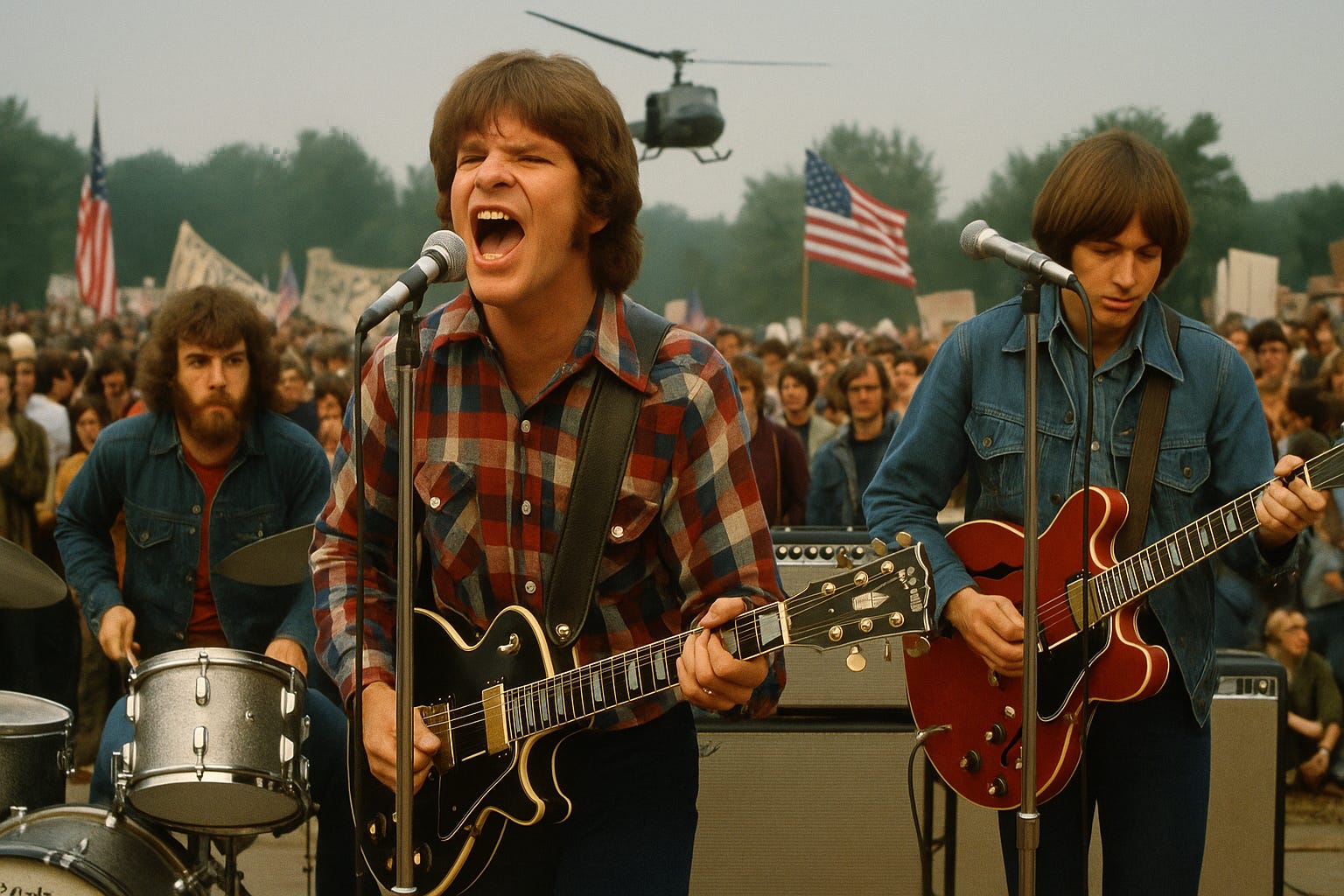
🎶 Freedom Means More When It’s Shared Fairly
Fogerty never names names, but his voice leaves no doubt. The song’s power lies in its directness. “Some folks are born, silver spoon in hand” paints a clear picture. These fortunate sons avoided the risk of war—an option not open to everyone. They exercised a kind of freedom: freedom from the cost of freedom itself.
In contrast, many working-class and minority Americans served without choice. The song questions the fairness of a system that lets some benefit from liberty while others fight to defend it. That gap, between privilege and obligation, still shows up in other forms today.
⚖️ Responsibility Isn’t Always Equal
In a spiritual context, “Fortunate Son” challenges us to examine what we owe each other. Real freedom comes with responsibility. It’s not just about having rights—it’s about carrying your share of the load. Fogerty’s words remind us that sacrifice should not fall only on the shoulders of the least powerful.
The structure of the song reflects this urgency. It moves fast, with no wasted notes. Like the message, the rhythm is sharp and focused. There’s no hiding behind metaphor or gloss. The injustice hits hard—and stays there.
💡 Did You Know?
Song: ”Fortunate Son”
Released: 1969 on Willy and the Poor Boys
Artist: Creedence Clearwater Revival
Writer: John Fogerty
Backstory: Inspired by class inequality during the Vietnam War draft
Message: Privilege can distort patriotism
Legacy: Inducted into the Grammy Hall of Fame in 2014
Fun Fact: Fogerty served in the Army Reserve, making the lyrics even more personal
💫 Try This
Think of one way your life has been helped by someone else’s responsibility—whether it’s a parent, teacher, veteran, or advocate. Then ask: How can I pass that help forward? What responsibility am I willing to take on so someone else can succeed?
Next week, we’ll revisit the story of Live Aid—how music moved the world to respond to famine in Ethiopia, and how collective action can turn sound into sustenance.
🎵 Reflections on music & meaning from Spirituality Today