
🙏 Living Generously
When the cup overflows

“I have found that among its other benefits, giving liberates the soul of the giver.” —Maya Angelou
“Whoever brings blessing will be enriched, and one who waters will himself be watered” (Proverbs 11:25, ESV).
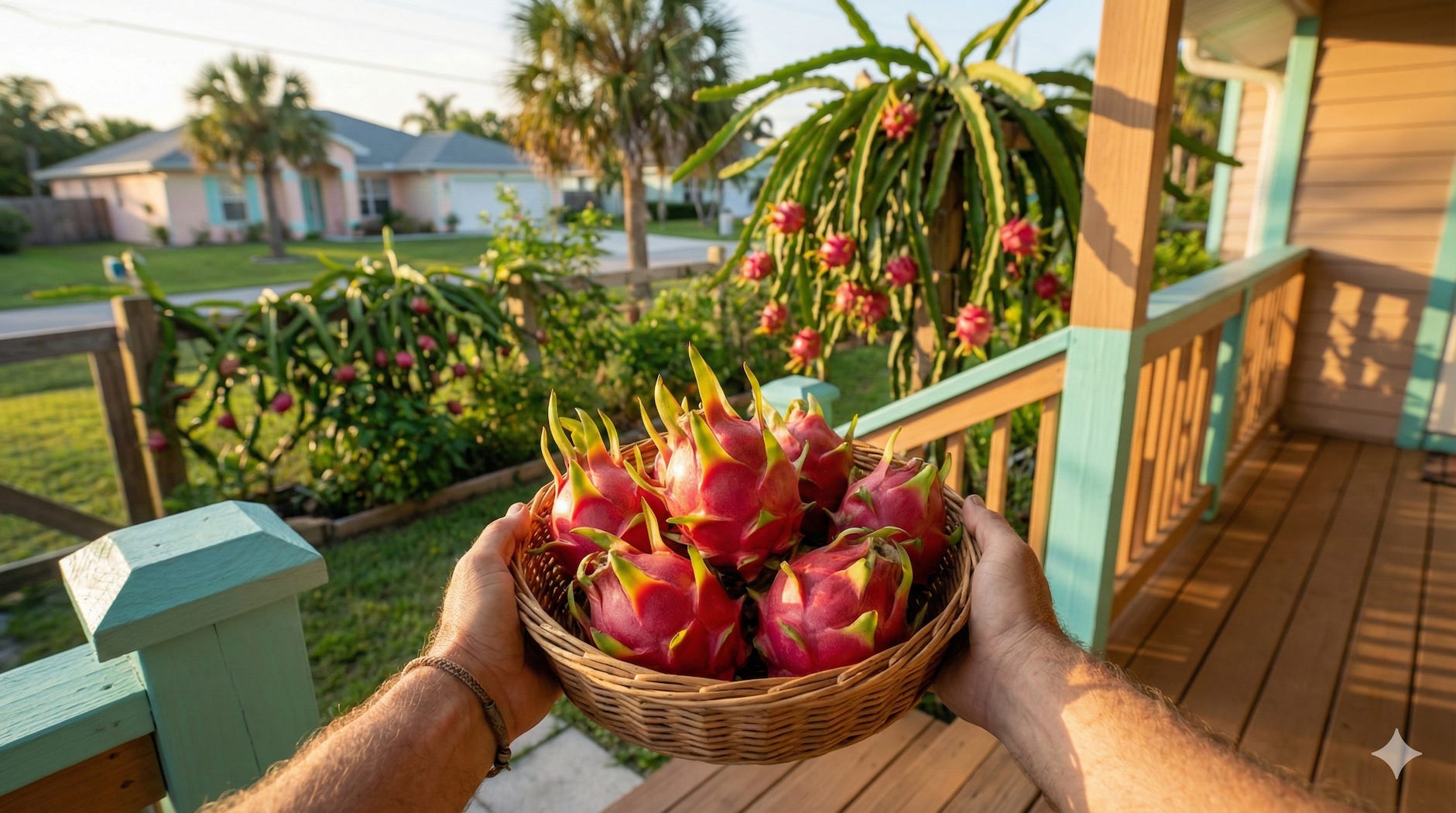
My neighbor knocked on my door Tuesday morning with a bag of dragon fruit. His vine produces more than his family can eat, so he shares. This happens throughout Thanksgiving week. Dragon fruit on Tuesday. Someone else brings extra pie on Wednesday. Thursday’s meal includes dishes made by people who enjoy cooking and want to contribute. The generosity flows throughout the week, not compressed into a single performance on the same day.
For three weeks, we’ve been building: recognizing abundance in Florida warmth, cultivating gratitude through honest practice, and expressing thanks to veterans and readers. We’ve done the work of noticing, clearing space, and giving voice. Now we live what we’ve learned.
When you’ve spent weeks paying attention to what you have, practicing genuine gratitude, and expressing appreciation to people who matter, you notice a difference. Generosity stops being a decision you make and becomes automatic. The cup fills through recognition and thanks. Eventually, it spills over. You can’t help giving because you’ve experienced receiving.
Two kinds of giving exist. The first comes from obligation. You give because you should, tracking who brought what, who helped enough, whether people expressed proper gratitude. This giving depletes. You finish feeling emptier than when you started, resentful that others didn’t notice your sacrifice.
The second comes from abundance. You give because you have enough. My neighbor’s dragon fruit vine produces fruit regardless of whether anyone thanks him for sharing. He gives from surplus, from what his garden provides beyond his family’s needs. This giving energizes. You finish feeling connected, part of community rather than competition.
What does this look like during Thanksgiving week? Real generosity happens in small moments throughout these days. Patience when your uncle tells the same story for the fifth year. Making space at the table for the guest who arrived unexpectedly. Listening without offering advice when your sister needs to process her year.
These moments cost little. They require only that we recognize we have enough attention, enough space, enough listening capacity to share. The three weeks of practice prepared us. We’ve trained ourselves to see abundance, feel gratitude, and express thanks. Living generously finishes what we started when we learned to notice.
My gratitude journal still sits beside my coffee each morning. The anti-gratitude entries still help me clear complaints and find perspective. The practice of expressing thanks still strengthens my connections. These disciplines continue. Living generously doesn’t replace them. The generous life flows from them, the natural result of sustained attention to what we already have.
Give from what you have in abundance this week. Share what comes easily. Offer what’s already yours: your time, your patience, your full presence, your actual listening—no scorekeeping needed. Let generosity be what happens when a cup is genuinely full.
Next week begins Advent. Living generously prepares us perfectly. We don’t need to add more tasks or try harder. We simply recognize we already have enough to give. The generous spirit that created abundance in the first place flows through us when we stop blocking it with scarcity thinking.
This article appeared in FLORIDA TODAY as Living generously when the cup overflows | Spirituality Today.