

TL;DR: Modern life has disconnected us from natural sunrise, so we’ve invented devices that simulate it. These tools genuinely help by treating seasonal depression, improving sleep, and easing winter mornings. They also reveal something deeper: we’re still searching for the light our ancestors naturally woke to.
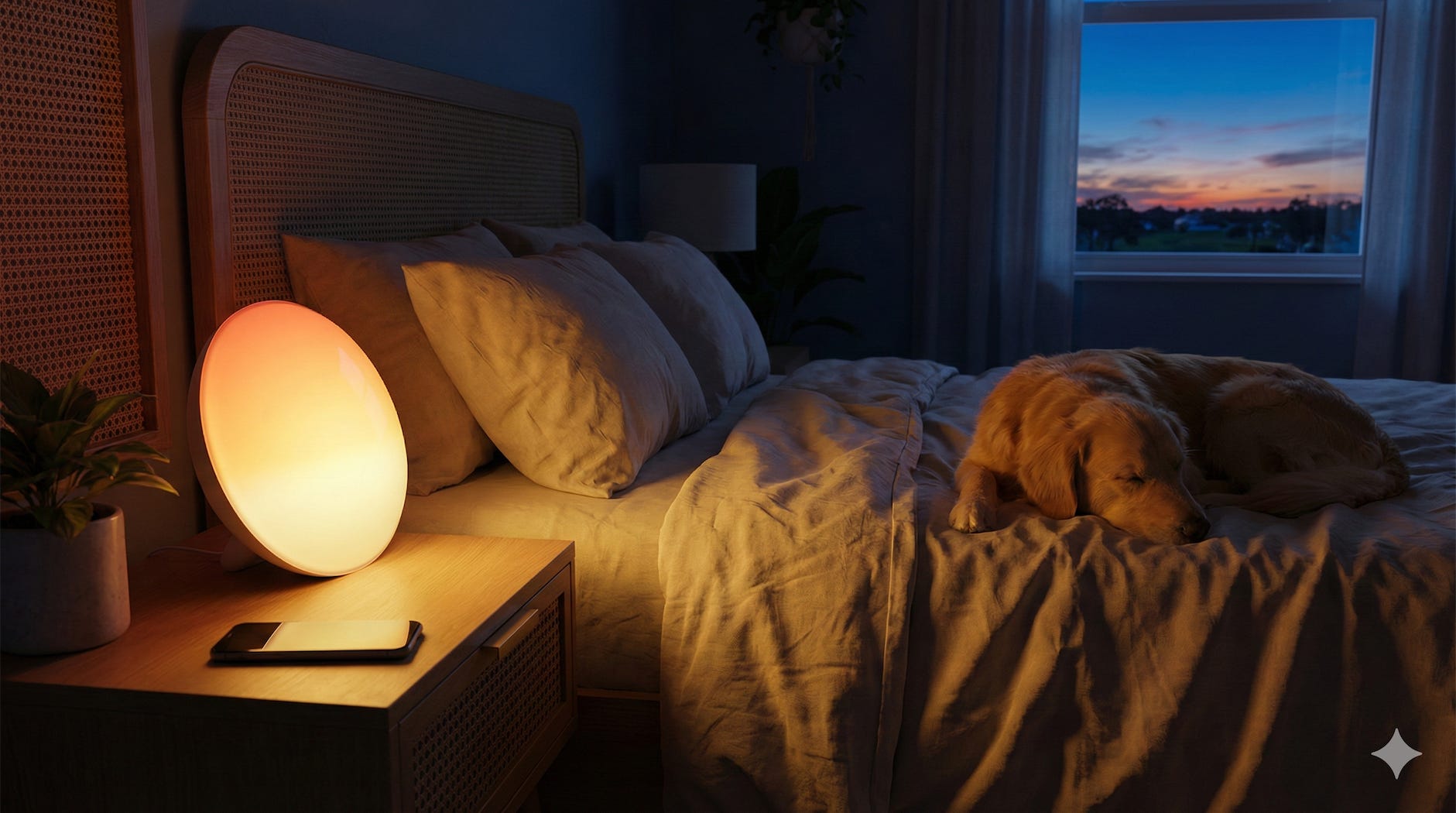
🌅 The Problem We Built Our Way Into
For most of human history, dawn was unavoidable—no curtains, no electric lights, no night shifts. The sun rose, and so did we. Our bodies evolved around this rhythm, calibrating hormones, sleep cycles, and mood to the slow brightening of the eastern sky.
Then we invented ways to ignore it.
Blackout curtains. Alarm clocks that jar us awake in darkness. Shift work. Screens that flood our eyes with blue light at midnight. We gained control over our schedules and lost something we didn’t know we needed.
Here in Florida, December sunrise doesn’t arrive until nearly 7:00 a.m. In Seattle, it’s closer to 7:45. In Helsinki, after 9:00. Millions of people now wake, commute, and begin work in complete darkness, never seeing the natural transition from night to day.
⏰ The Technology of Simulated Sunrise
The market responded. Philips introduced its Wake-Up Light in 2006, a bedside device that gradually brightens over 30 minutes to simulate dawn. The concept was simple: fool your circadian system into thinking the sun is rising, and your body will wake more gently than any buzzing alarm allows.
Nearly two decades later, the category has exploded. The Philips SmartSleep costs around $200 and offers multiple light intensities and natural sound options. The Hatch Restore ($130) combines sunrise simulation with sleep sounds and a wind-down routine. Budget options from brands like Dekala and Coulax start under $30.
Smart home systems take it further. Philips Hue bulbs can be programmed to shift from deep red to warm orange to bright white across your entire bedroom, recreating not just brightness but the color temperature progression of actual dawn. Some users report it’s the first time they’ve woken without an alarm in years.
The science supports it. A 2019 study in the Journal of Sleep Research found that dawn simulation improved subjective sleep quality and morning alertness compared to conventional alarms. Research on Seasonal Affective Disorder (SAD) has shown that light therapy — essentially concentrated artificial dawn — can be as effective as antidepressant medication for winter depression.
🔬 What the Devices Reveal
These tools work. That’s not the interesting part.
The interesting part is that we needed to invent them in the first place.
We built environments so disconnected from natural light that we had to engineer our way back to something humans experienced freely for 200,000 years. The sunrise simulator on your nightstand is a technological solution to a technological problem. We blocked out the dawn, then built machines to fake it.
This isn’t criticism. The devices help real people with real struggles. Seasonal depression is genuine suffering; if a $30 lamp provides relief, that’s worth celebrating. Waking gently instead of being startled by an alarm improves the first moments of each day.
Still, there’s something worth noticing. Our hunger for simulated dawn reveals that the original version mattered more than we realized. The light we’re manufacturing is the light we were always meant to see.
🌴 Florida’s Paradox
Even in the Sunshine State, we face this disconnect. Our homes have thick curtains and tinted windows. Our bedrooms face west. We sleep with phones charging beside us, their screens the last light we see before sleep and the first light we reach for upon waking.
This December, sunrise in Melbourne occurs around 6:55 a.m. Most of us will miss it entirely, already indoors, already looking at screens, already disconnected from the slow brightening that our great-grandparents knew as intimately as breathing.
The technology exists to simulate what we’ve lost. It also exists to remind us that we lost it.
💡 Did You Know?
The human circadian rhythm responds most strongly to blue-enriched light, which is why sunrise (heavy in blue wavelengths) signals wakefulness, while sunset (red-shifted) signals sleep. Most sunrise simulator lamps now progress through this spectrum, starting with warm reds and ending with cool whites — mimicking what the sky does naturally.
👉 Try This
This week, try waking with your actual window. Open the curtains before bed and let the natural light progression reach you. If December darkness makes that impractical, experiment with a sunrise lamp or smart bulb routine. Notice the difference between being startled awake and being gradually called into the day. The technology works — but so does the original version, when we let it.
🤖 Reflections on technology & society from Spirituality Today