
🙏 Resolution’s Real Work
Eighty years since Tokyo Bay

This week’s reflection serves as a coda to August’s theme of Conflict and Resolution. The calendar places us at an important anniversary: September 2, 1945, when World War II officially ended. Eighty years later, it remains a fitting moment to consider both the resolution of conflict and the labor of rebuilding that followed.
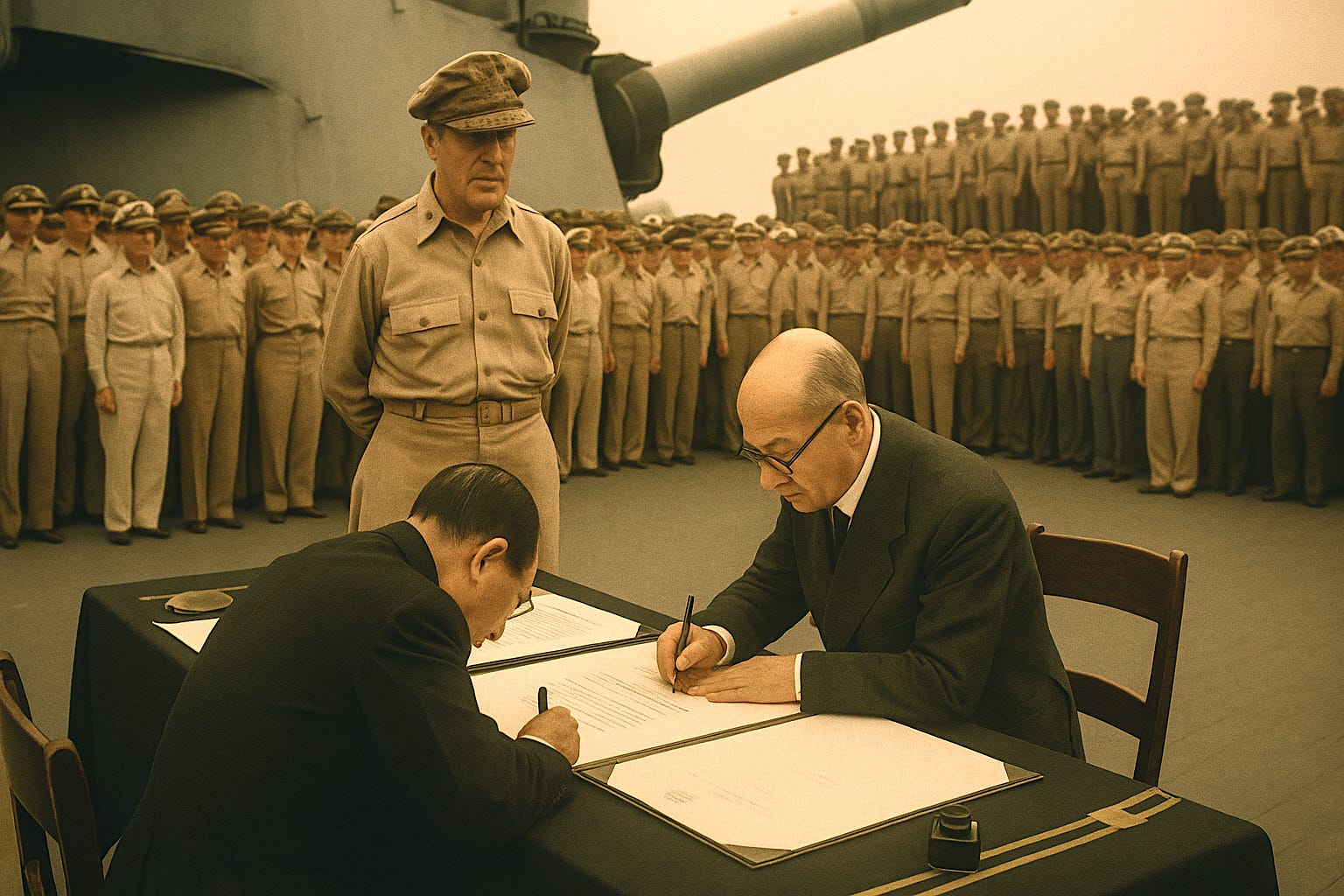
Eighty years ago today, Japanese officials boarded the USS Missouri in Tokyo Bay. General MacArthur stood watching as they signed the document that ended World War II. The ceremony lasted twenty-three minutes. The rebuilding would take decades.
The scale of loss still staggers us: seventy million dead, entire cities erased, economies shattered. Victory celebrations erupted worldwide on September 2, 1945. Families reunited. Soldiers returned to farms and factories. Life resumed its rhythms. Yet the more arduous labor was just beginning. Those who’d lost everything had to live alongside those who’d taken it. Former enemies became neighbors, coworkers, and citizens of rebuilt nations.
Consider what happened next. The Marshall Plan invested thirteen billion dollars (over $150 billion in today’s money) in rebuilding Europe. Japan received food, medicine, and expertise to reconstruct its society. Former enemies worked side by side laying railroad tracks and raising buildings. These were not grand gestures, but thousands of small choices: American engineers teaching Japanese workers, European neighbors sharing scarce resources, communities choosing cooperation over revenge.
Tokyo itself tells this story. Five years after surrender, the city that American bombs had reduced to ash was rising again. Japanese construction crews worked alongside American engineers. Former soldiers from both sides shared blueprints and break rooms. They built the Tokyo Tower in 1958, modeled after the Eiffel Tower, symbolizing Japan’s reconnection with the world. Each rivet and beam represented a choice: cooperation over isolation, future over past.
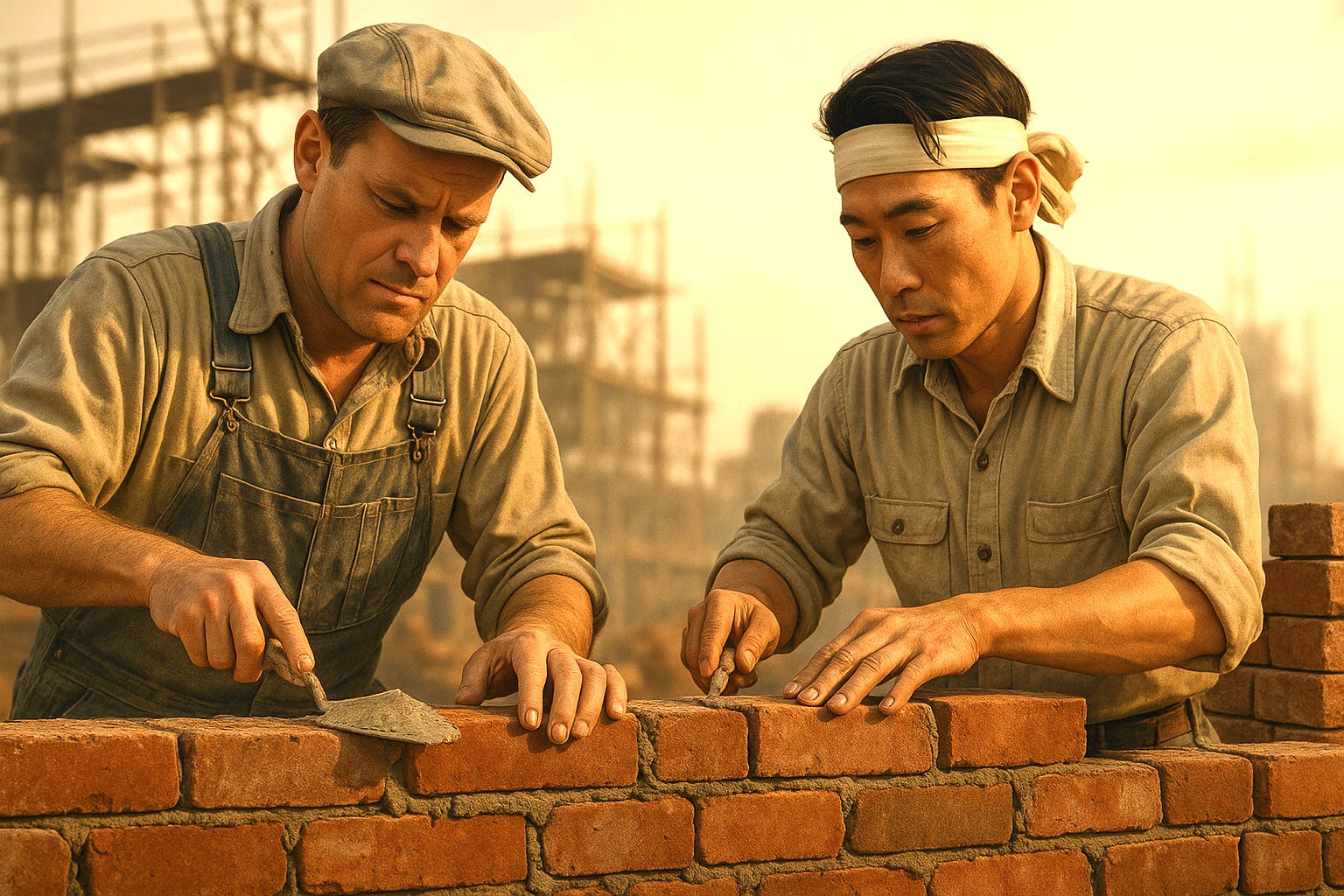
This anniversary coincides with Labor Day weekend, when we honor all forms of meaningful effort. The generation that ended World War II understood that some tasks matter more than paychecks. They invested sweat and patience into healing fractured nations. They built institutions designed to prevent future conflicts. They chose reconciliation when bitterness would have been easier.
Each of us faces similar choices in smaller theaters. A neighbor’s political yard sign tests our tolerance. Family dinners strain under unspoken tensions. Old friendships fracture over new disagreements. Resolution requires the same patient effort our predecessors demonstrated: choosing connection over correctness, understanding over judgment, future possibilities over past grievances.
Today marks eight decades since representatives signed surrender documents in Tokyo Bay. Their signatures ended one chapter. The unnamed millions who chose reconciliation over resentment wrote the next one. They understood that authentic resolution happens in hardware stores and hospitals, in schools and neighborhoods, wherever people decide that building together beats standing apart. That decision remains ours to make, every single day.