

TL;DR: AI-enabled robots can learn from experience, adjust to new conditions, and refine performance over time—shifting from rigid programming to flexible problem-solving. NVIDIA’s GR00T platform and Foxconn’s factory initiatives demonstrate how this technology is being integrated into real-world production. As these adaptive machines move into workplaces and homes, we must guide their use with policies that protect dignity and ensure they strengthen, rather than erode, human worth.
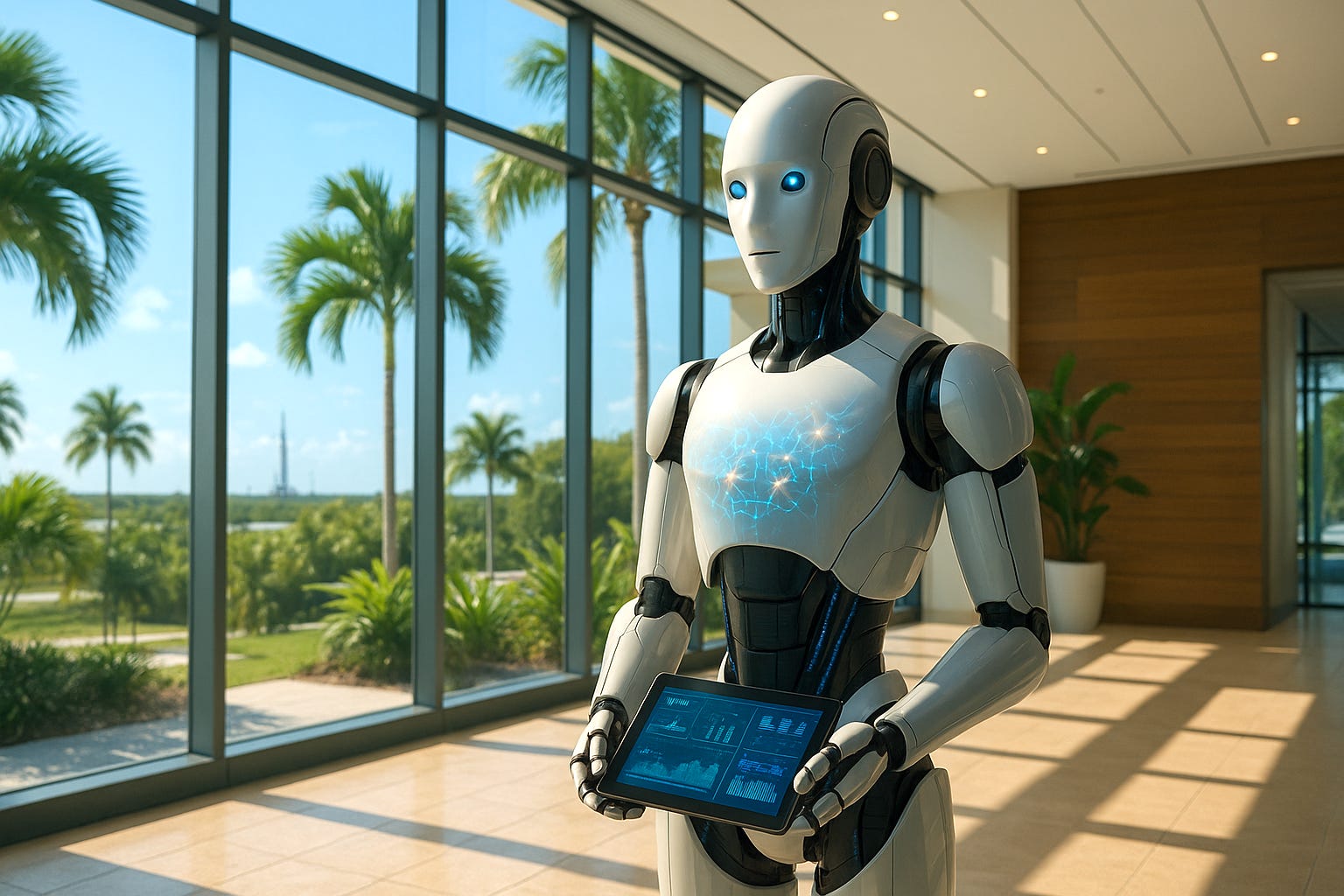
🔄 From Script to Improvisation
In a traditional factory, a robotic arm repeats the same motion thousands of times. Each weld lands at the exact same point. Each bolt is tightened with identical force. Precision arises from rigid programming and flawless repetition.
Artificial intelligence changes that equation. With AI, a machine can learn from experience, adapt to unexpected situations, and generate responses it was never explicitly programmed to do. The shift moves us from mechanical repetition to flexible problem solving. That difference reshapes how we view automation, human work, and human worth.
Already, we see this shift in action. Self-driving cars navigate unpredictable traffic. Warehouse systems reroute around unplanned obstacles. Voice assistants interpret questions phrased in countless ways. These are systems that observe, decide, and then improve themselves over time.
That evolution introduces tension. When machines begin to adapt independently, what remains distinctly human? Where do judgment, creativity, and wisdom still hold value? These become practical questions when AI-powered systems enter workplaces, eldercare facilities, and homes—and influence how we perceive our own purpose.
🧠 Three Foundations: Seeing, Remembering, Choosing
AI-powered systems rest on three core capabilities working together:
Pattern recognition lets them learn from data. A warehouse robot “remembers” which paths proved efficient.
Vision and perception systems give environmental awareness. Cameras, depth sensors, and other inputs enable robots to detect objects, track movement, and assess context.
Language and reasoning enable natural communication. Users do not need to issue exact technical commands. The robot can parse user intent and respond accordingly.
When you combine these, systems function in unpredictable settings. A warehouse unit navigating crowded aisles senses obstacles, recalls successful routes, and calculates alternate paths without human supervision. It adapts in real time.
Eldercare applications push this further. A caregiving robot might track your daily patterns—what time you wake, where you keep items, and how your tone shifts when tired. Over time, it offers assistance aligned with your rhythm. The technology feels less generic, more personally calibrated.
That personalization carries a dual effect: it feels both helpful and intimate. A machine that knows your habits begins acting like an aide. That raises questions about privacy, autonomy, and the essence of care.
🏭 NVIDIA and Foxconn: Building the Backbone
This transformation is underpinned by infrastructure already in development. NVIDIA’s Isaac GR00T platform powers a new generation of robot reasoning. Its GR00T N1 model features a dual-system architecture: a “fast” reflexive model for immediate action, and a “slow” deliberative model for planning and understanding context.
GR00T enables robots to generalize across tasks—grasping, handling objects, and combining skills — rather than being narrowly programmed.
Foxconn is reportedly in talks with NVIDIA to deploy humanoid robots in a new Houston facility that will produce NVIDIA AI servers. The plan would mark the first time NVIDIA products are manufactured with the assistance of humanoids. Deployment could begin in early 2026.
Foxconn has been testing robots for tasks such as object insertion, cable routing, and component handling. The strategic logic is clear: Foxconn brings manufacturing scale and layout; NVIDIA supplies the AI computing and models. Without specialized hardware, many adaptive systems would lag far too slow to be practical in real-world settings.
🤔 Your Stake: Worth, Work, and Responsibility
These developments sound abstract until you recognize their trajectory. Within this decade, eldercare systems could monitor health, assist with mobility, and respond to emergencies from the comfort of your home. They might allow more people to age in place, but they also raise hard questions about the boundary between assistance and surveillance.
Progress requires parallel ethical development. Who ensures safety when machines make autonomous decisions? What protects privacy when systems track daily routines? How do we assign responsibility when a system errs? Technology evolves faster than policy—and that gap creates real risks for dignity and trust.
Here’s what you can do: Stay informed through credible sources. Ask questions about how these systems operate and who sets their constraints. Engage in public discourse about their deployment. The machines that learn and adapt will soon share our workplaces, caregiving facilities, and homes. The path they take depends on the choices we make now.
The age of adaptable machines is upon us. Whether they amplify human worth—or diminish it—rests in how we define work, value, and responsibility in their company.
🤖 Reflections on technology & society from Spirituality Today