

In Week 2 of our Advent for Everyone series, we explore peace and the practice of Finding Stillness. Monday’s Compass addresses a widow dreading the quiet of another December without her husband. The response distinguishes between the silence we fear and the peace we seek, offering practical steps for those who find the holidays magnify their loss.
💬 Dear Compass,
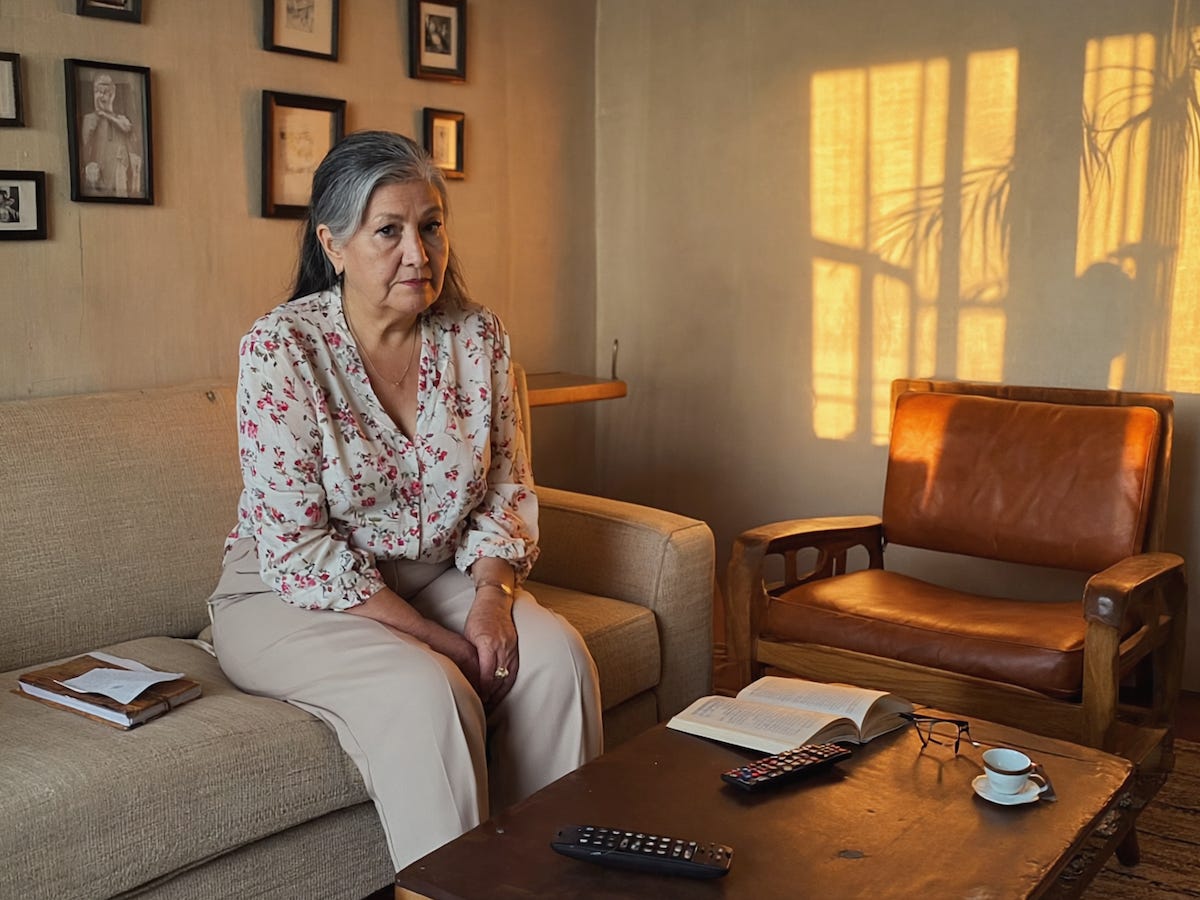
The holidays are supposed to be peaceful, but I dread them. My husband passed away two years ago, and December magnifies his absence. The house feels too quiet. I fill the silence with television, podcasts, anything with voices. Friends tell me to “find peace” and “be still,” but stillness is precisely where the grief lives.
Everyone around me seems busy with parties and shopping. I feel like I’m standing still while the world rushes past.
🤔 How do I get through another December when the quiet terrifies me?
— Standing Still in Satellite Beach
🧭 Dear Standing Still,
You have named something important. The peace others recommend can feel like a door you do not want to open. Behind that door waits everything you have been avoiding. Your instinct to fill the silence makes complete sense. We grieve in the pauses.
Two years is not very long. Our culture rushes mourning, expecting timelines that grief refuses to follow. You are still learning how to live in a house that used to hold two people. In the quiet, you hear what is missing. Of course you reach for noise.
Here is what I have learned from my own seasons of loss. The silence we fear, and the peace we seek, are not the same thing. Silence is the absence of sound. Peace is the presence of something else: acceptance, memory held gently, the slow recognition that love does not require a living person to remain real.
You do not have to force yourself into stillness. You can approach it in small doses, the way someone adjusts to cold water. Five minutes with the television off. A walk around the block without earbuds. Sitting with a photo album and letting the memories come. You control the pace.
When you feel ready, try this: instead of filling the quiet, furnish it. Light a candle your husband would have liked. Play music you enjoyed together. Speak his name aloud in the empty room. You put something of him inside the silence. It becomes less empty.
This December will be hard. It does not have to be harder than it already is. Let yourself grieve at your own pace. Let the noise comfort you when you need it. Let the quiet come when you are ready. Both are allowed.
You are not standing still. You are standing. That is enough.
🧭 The Compass
🪞 Reflections for the Journey
I watched a heron at the edge of our lake last week. It stood motionless for what felt like twenty minutes, staring at the water. Then, in one quick motion, it struck. Dinner. The bird had not been idle. It had been working the whole time, reading the water, waiting for the right moment.
We tend to think of stillness as inactivity. Rest as the opposite of productivity. We measure our days by what we accomplish, and quiet hours feel like failures. During the holidays, this pressure multiplies. Everyone seems to be doing something. We think we should be doing something too.
The heron knows differently. Stillness can be its own kind of action. Waiting is not the same as wasting. Sometimes the most important work happens in the pause before the motion.
Those of us carrying grief understand this in ways others might not. The quiet that unsettles us also holds what we need: time to remember, space to feel, room for the love that has nowhere else to go. We cannot rush through this work. We cannot fill every silence and expect healing to happen anyway.
The second candle of Advent represents peace. For those standing beside an empty chair this season, peace may feel impossible—a cruel suggestion from people who do not understand. Yet finding peace does not require forgetting. It requires only that we stop running from what we carry.
The heron stands still because stillness serves a purpose. Our stillness can serve a purpose, too. In the quiet, we hear what the noise has been covering: that we are still here, still breathing, still capable of love.
During the holidays, we feel pressure to stay busy. We can also permit ourselves to be present. To stand at the water’s edge. To wait. To trust that something is happening in the silence, even when we cannot see it.
🧭 The Compass: Moral guidance for modern crossroads
❓Ask a Question: Send your dilemma to compass@cts.today
📬 Pass It On: Forward this note to someone struggling with a similar dilemma