

TL;DR: The moment before clicking Send matters more than the milliseconds after. Every platform handles this doorway differently, but they all recognize the same truth: we need time to pause, reconsider, and send with intention. That brief hesitation transforms rushed communication into deliberate connection.
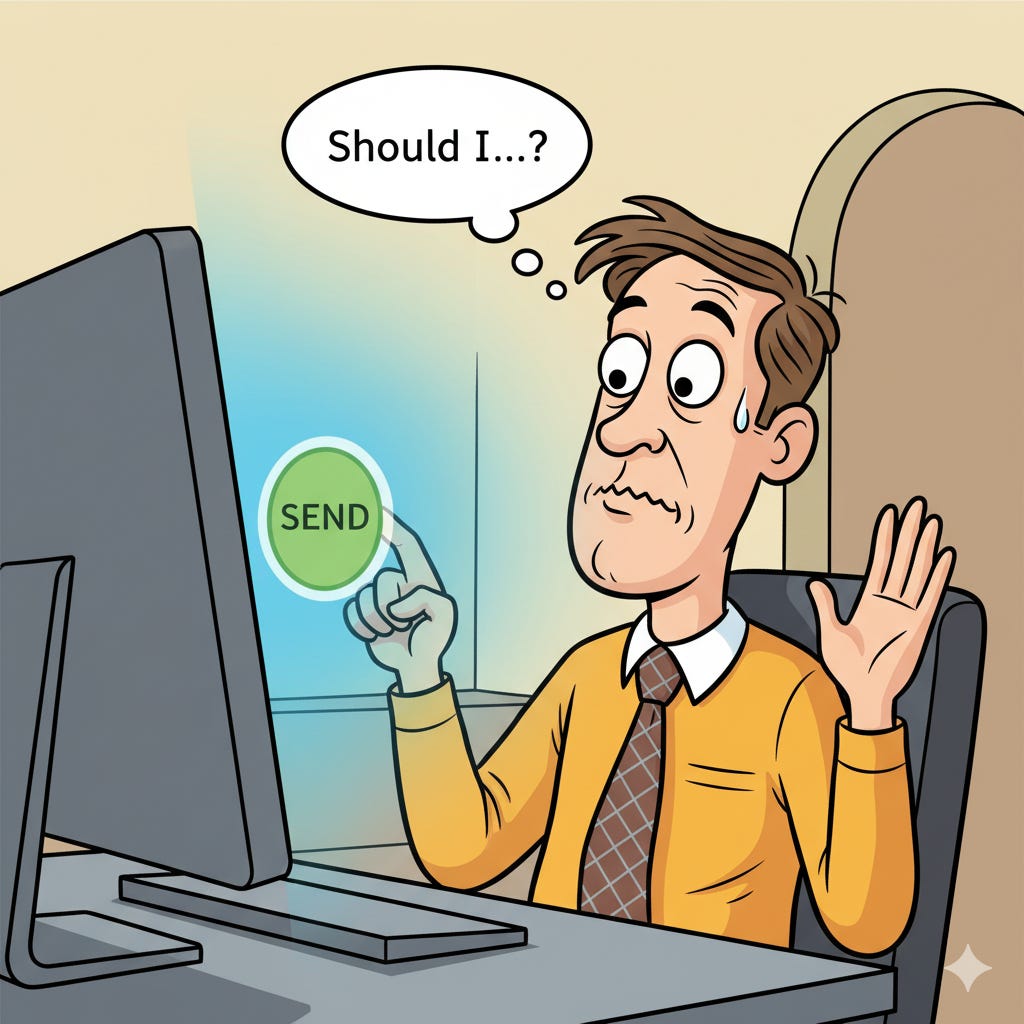
My finger hovers over the Send button. The message is written. The cursor blinks. For a breath or two, I pause. That instant between writing and releasing carries more weight than most of us realize. The modern world measures time in milliseconds. This slight pause still holds something valuable: the moment between thought and action, intention and connection.
When I click Send, I cross a digital threshold. Behind the scenes, servers authenticate, packets are routed, and data is replicated. What was private becomes public. What was mine alone now travels beyond my reach. Even routine messages, once released, belong partly to others.
📱 How Platforms Handle the Doorway
Tech companies recognize this tension. Gmail offers “Undo Send,” delaying actual transmission for 5, 10, 20, or 30 seconds. You choose the delay in settings. During this window, you can stop the message. Apple Mail introduced a similar feature in 2022 with the same time options: 10, 20, or 30 seconds. Microsoft Outlook provides “Recall This Message,” though it works only under specific conditions: both sender and recipient must use Exchange servers, and the recipient hasn’t opened the message yet. Success rates for Outlook recalls remain low in practice.
These tools acknowledge what we already know: sometimes we need time to reconsider our decisions. Each platform builds the doorway differently. Gmail assumes we all need a few seconds. Outlook assumes organizations need control. Apple listened to user requests for years before adding the feature. The variation matters because it reveals different philosophies about communication itself.
We want speed and thoughtfulness together. We want instant connection and deliberate pause. The platforms that succeed provide both.
⏸️ What the Pause Gives Us
I sent a terse email to a colleague late one Friday afternoon. The weekend gave me time to regret it. By Monday morning, the damage had settled in. We eventually patched things up, but the words stayed between us longer than I wanted. That experience taught me about doorways: walking through them with care beats trying to walk back through them later.
The moment before clicking Send creates awareness. I weigh tone. I check timing. I consider consequences. I look at the recipient line twice, sometimes three times. In that pause, I practice mindfulness that modern life’s pace tends to crowd out. Deliberate communication prevents errors. More than that, it cultivates grace.
Courage also fills that pause. Every message carries risk. Clicking ‘Send’ means trusting that my words will land well. It means accepting imperfection in myself and my tools. The act of sending—email, letter, or text—expresses belief in connection.
🚪 Standing in the Doorway
Modern systems evolve constantly. The human dilemma persists. We long for safety and expression together, control and release at once. The send button occupies that intersection, a small rectangle holding both possibilities.
Before sending your next message, linger for a moment. Read once more. Breathe. Then send with intention. In that pause, you stand in the doorway between isolation and understanding. Every click carries power to connect, to heal, to harm, or to help. The choice belongs to you.
🤖 Reflections on technology & society from Spirituality Today