
🙏 Anticipating Light
The First Sunday of Advent: Hope

“Hope begins in the dark, the stubborn hope that if you just show up and try to do the right thing, the dawn will come.” —Anne Lamott
“I wait for the Lord, my soul waits, and in his word I hope; my soul waits for the Lord more than watchmen for the morning, more than watchmen for the morning” (Psalm 130:5-6, ESV).
December begins in darkness. Here in Florida, the sun rises around 6:50 a.m. this time of year. For those of us who wake early, the wait can feel long. I often sit with my coffee in those pre-dawn minutes, scanning the windows for the first pink suggestion of morning. The dogs are still asleep. The house holds its breath. Everything waits.
This Sunday marks the First Sunday of Advent, a season observed by Christians worldwide as a time of preparation for Christmas. The word “Advent” comes from the Latin adventus, meaning “arrival” or “coming.” For four weeks, churches light candles one by one, each flame representing a theme: hope, peace, joy, and love. The season moves from darkness toward light, from anticipation toward fulfillment.
You don’t need to be Christian to understand Advent’s rhythm. Every person knows what it means to look for something not yet visible. We’ve all sat in waiting rooms, checking phones for news that hasn’t arrived. We’ve scanned driveways for headlights, searching the street for someone running late. We’ve held our breath during the pause before test results, before answers, before the next chapter reveals itself.
This kind of attention requires a particular discipline. The temptation is to fill the waiting with anxiety, to rehearse worst-case scenarios, to pace and fret. Another temptation is to distract ourselves completely, scrolling through feeds until the moment passes. Advent suggests a third way: attentive stillness. We look without grasping. We remain present to the darkness while trusting that light will come.
My grandmother kept Advent faithfully, lighting her wreath each Sunday evening. The smell of evergreen filled her small living room. As a child, I found the ritual puzzling. Why wait? Christmas was coming regardless. She would take my hand, and together we would watch the small flame. Now I understand something she knew intuitively: the waiting shapes us. How we spend the darkness determines how we receive the light.
Here on the Space Coast, December brings its own rhythms of anticipation. We scan the eastern sky for rocket launches, those bright ascending flames that turn night into sudden day. We check weather patterns during the tail end of hurricane season, hoping for calm. We look for seasonal visitors, for snowbirds arriving from the north, for family members whose flights will land soon.
This first week of Advent focuses on hope, and hope is precisely what attentive waiting requires. To keep looking when nothing visible has changed demands trust. To remain present in the darkness requires belief that dawn will arrive. This is hope’s essence: continuing to look toward light we cannot yet see.
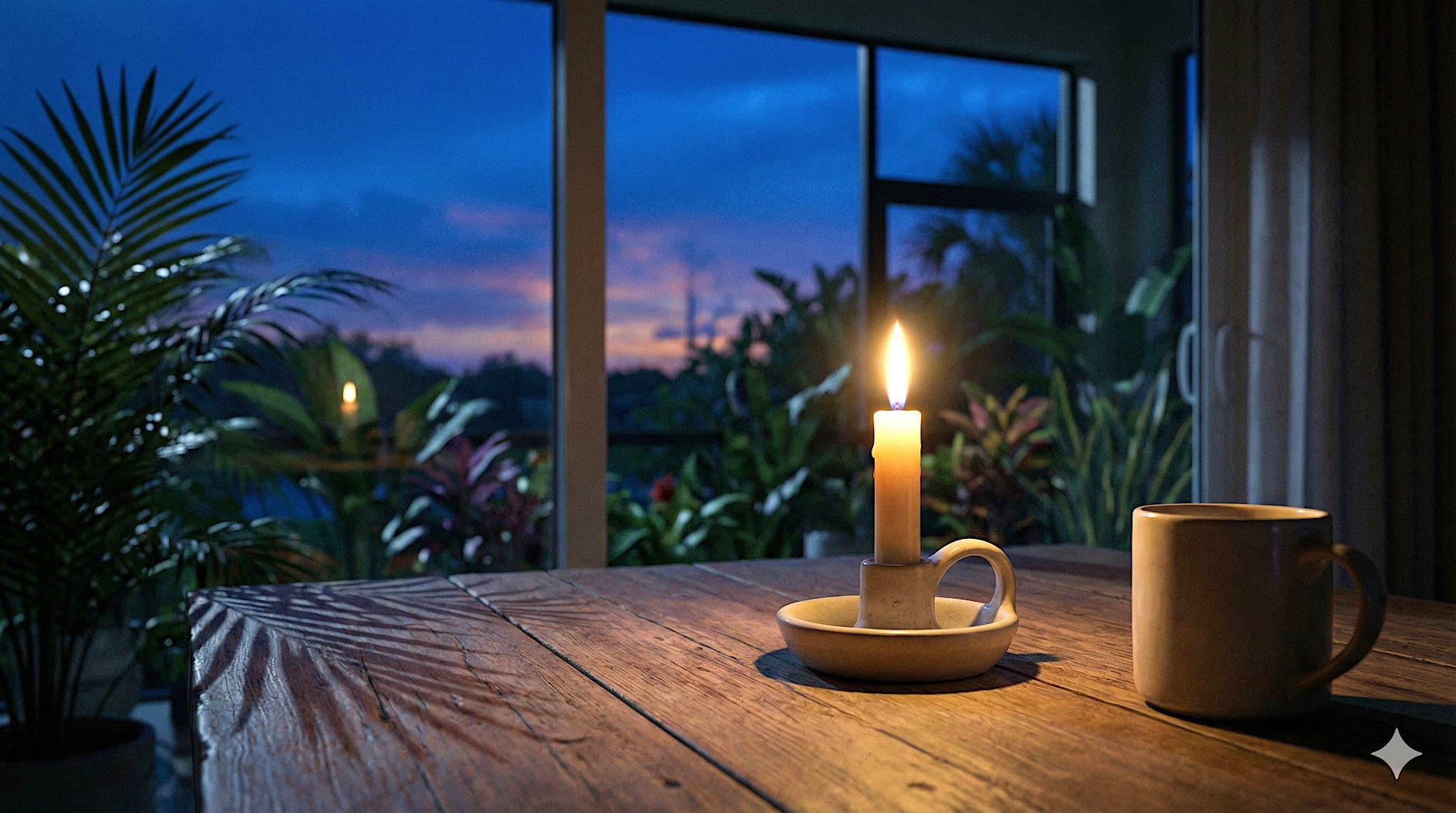
The first candle on the Advent wreath is called the candle of hope. One small flame against the surrounding darkness. It doesn’t illuminate the whole room. It simply proves that light exists and can be kindled.
This week, notice where you are waiting for something. A response to an important message. A change you’ve been working toward. Trust without demanding proof that the light is coming. For now, we watch.
This article appeared in FLORIDA TODAY as Watching for light on the First Sunday of Advent | Spirituality Today.