
🙏 Who Would Ever…
Why do they make things so complicated?

“Men are what their mothers made them.’” —Ralph Waldo Emerson, The Conduct of Life (1860), in the essay “Fate”
“I am reminded of your sincere faith, a faith that dwelt first in your grandmother Lois and your mother Eunice and now, I am sure, dwells in you as well” (2 Timothy 1:5, ESV).
The clearest evidence that someone has shaped us across decades is a phrase that lands in our own speech without our choosing it. The thing we say at dinner that turns out, on second hearing, to be theirs. I couldn’t bring myself to name mine that day. This week, with Mother’s Day at hand, I can. Mine came from my mother. I have been hearing it from my own mouth for years.
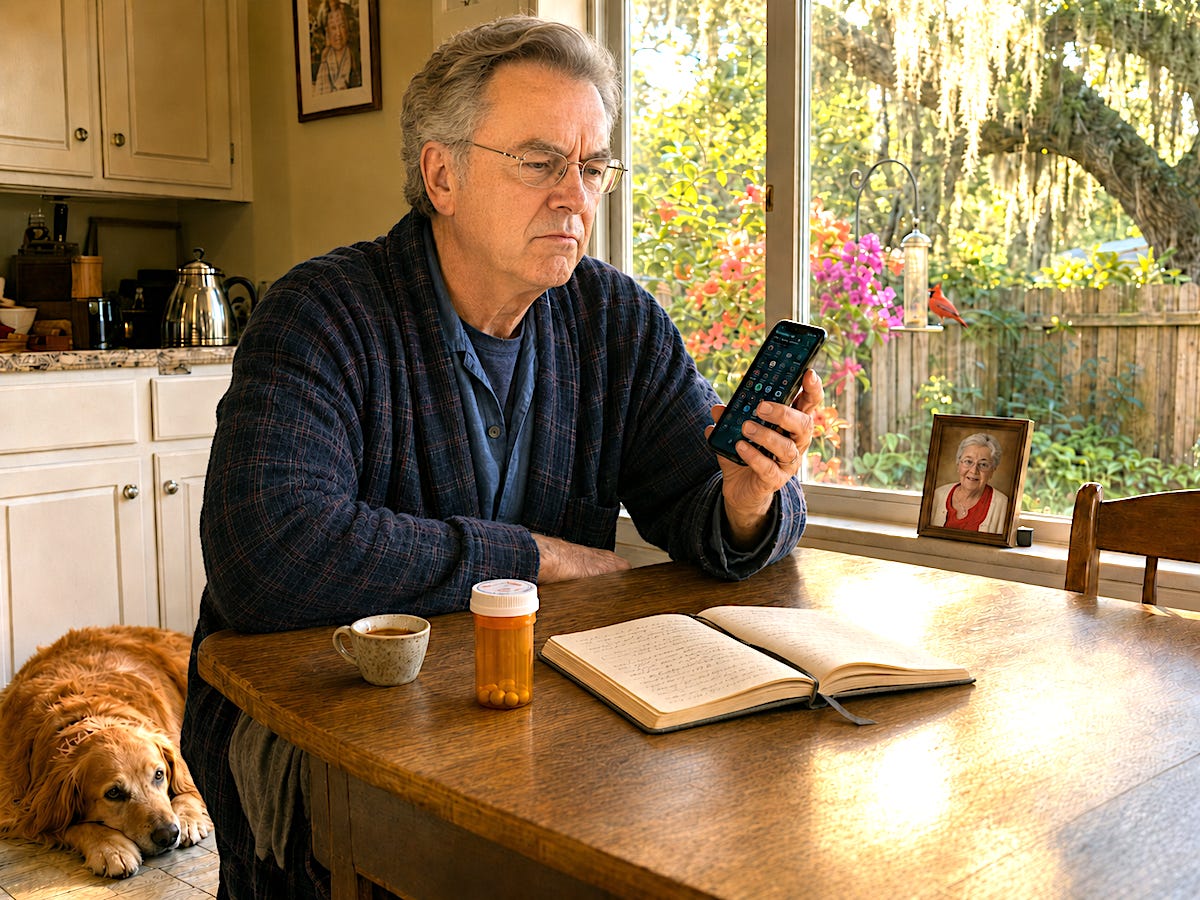
My mother never understood how technology worked, and she never pretended otherwise. Phones, computers, microwaves, anything with a screen or a button. She approached them like artifacts handed to her in the dark. She would press things in the wrong order. She would hold the device upside down. When something refused to do what she wanted, she would look up at me and ask, with genuine bewilderment, “Why do they make things so complicated?”
I used to tell her she would have made a great software tester, though she would have shrugged that off. Engineers never imagine the user who has no idea what the device is for. She didn’t know what she wasn’t supposed to do, so she did everything. The designers had their own phrase for behavior like hers. “Who would ever...” they would say, as if she were the edge case. She wasn’t. She was every senior citizen they had not pictured. Software companies should have hired her by the dozen.
Now I hear her phrase coming out of me, and I don’t always notice when it starts. At the pill bottle that refuses to twist open. At the call tree listing 13 options, each choice leading to another menu. At the website that loses my cart between pages. At the printer that asks for a software update before it will print. “Why do they make things so complicated?” I hear myself mutter. To my wife, at a parking sign that contradicts itself. At talks, a simple idea now takes thirty slides to explain. The voice is mine. The words are hers.
What she really gave me was not the question. It was the posture beneath it, a permission to find poorly designed things absurd, to stop assuming that broken design is my fault. She trained my ear long before she trained my tongue. There was a particular emphasis she put on my name, one nobody else has ever quite duplicated, that I can still hear if I close my eyes. The tongue followed the ear, eventually.
The strange part of catching her phrase in my mouth is that there is no good way to tell her she has thoroughly won. It comes anyway, unbidden, useful, hers. Mother’s Day is a day when the absent feel close, when the voices we carry surface in our own throats. Whether she meant to leave it there or not, I will never quite know.
Next week, we turn to what we miss in what others say. Even with people we know well, there are things we don’t always hear. The voice we recognize is not the same as the voice we listen to.
This article appeared in FLORIDA TODAY as On Mother’s Day, my mother’s words echo in my voice | Spirituality Today.