

This week concludes November’s exploration of The Generous Spirit with the theme of Living Generously. Sunday’s column explored generosity that flows from abundance. Today’s haibun turns to the quiet aftermath of the feast, when generosity takes the form of what we send home with others.
Leftovers
By Scott Tilley
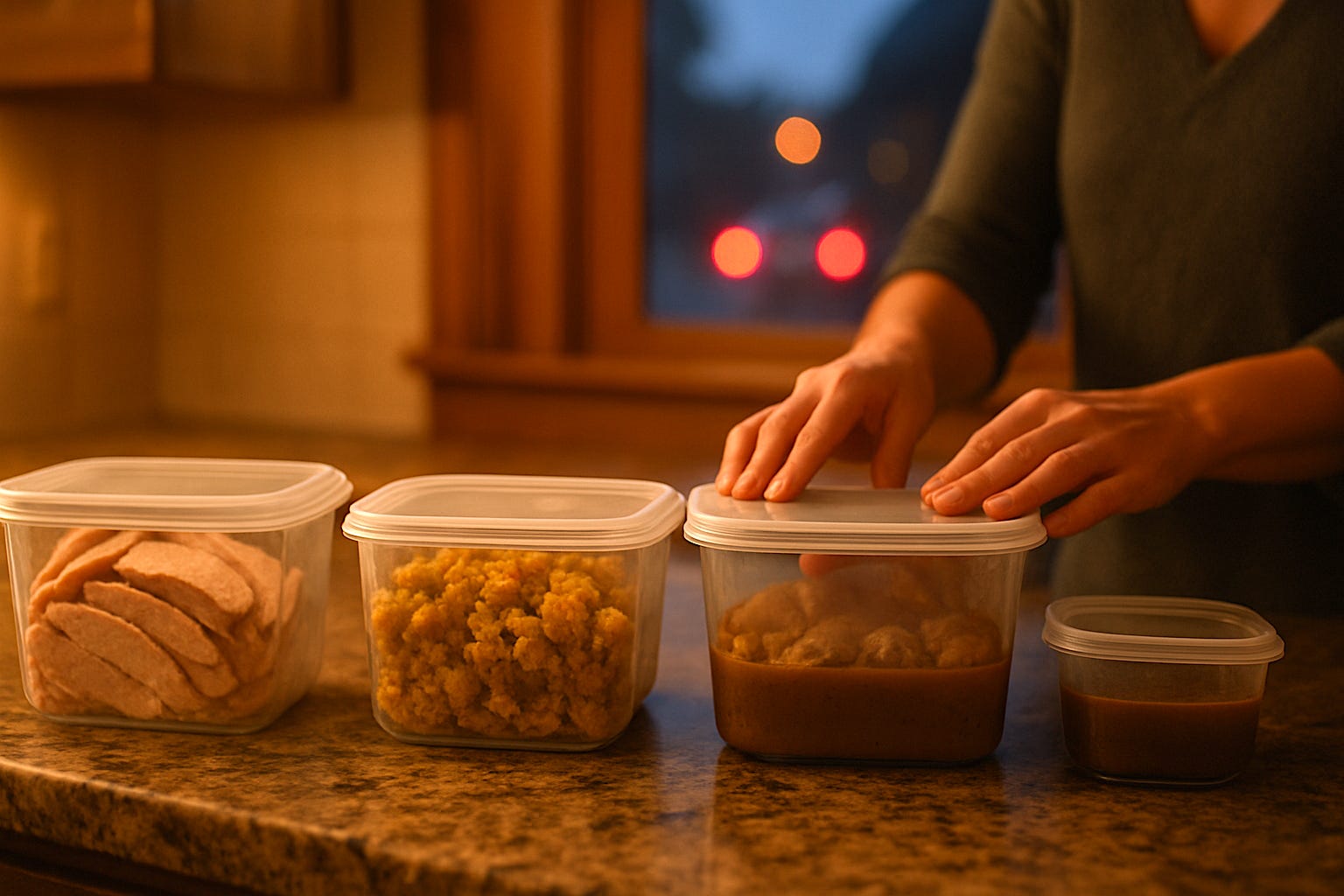
The meal is over. Chairs pushed back, napkins crumpled, the last of the wine catching the kitchen light in someone’s forgotten glass. My wife stands at the counter with a stack of containers, spooning stuffing into one, layering turkey in another, sealing each lid with a soft click. She has done this for years. The giving does not end at the table.
Her mother takes the largest container. My brother-in-law gets the one with extra gravy because she remembers he soaks everything. The neighbors who joined us, new to the street and far from family, leave with enough for three more meals. Each portion measured by knowledge: who lives alone, who has children, who will forget to eat tomorrow if no one reminds them.
The door opens and closes. Headlights pull away. The kitchen goes quiet. Somewhere in the stack of dirty dishes, the good plates wait to be washed and put away for another year. The house feels larger now, emptied of voices but not of warmth.
I find her wiping the counter, the last container still on the shelf. “Who’s that one for?” I ask.
“Us,” she says. “Friday lunch.”
Even the keeping is a kind of giving. She has saved us from having to decide.
     Tupperware stacked full
     taillights fade down the dark street
     carrying our warmth
🪞 Poet’s Note
I never thought much about the container ritual until I noticed how long my wife spends on it. Not the cooking, which gets all the attention, but the dividing up afterward. She remembers things I forget: who mentioned being tired of cooking, whose kids are picky, who might not have another home-cooked meal this week. The feast itself lasts an hour. The leftovers feed people for days.
✍️ Poetry Matters from Spirituality Today